Loading...
Cracked, damp, or uneven garage floor? We pour concrete slabs in Port Arthur built for the clay soil, moisture, and heat that destroy poorly prepared floors.
Garage floor concrete in Port Arthur starts with removing the old slab or preparing bare ground, compacting the base, and pouring fresh concrete to a flat, trowel-finished surface - most residential jobs are completed in one pour day, though the full project takes longer once you include demo, base prep, and curing time. The Gulf Coast conditions here make base preparation more demanding than most of Texas: shallow water tables, expansive clay soil, and over 55 inches of rain per year all stress a slab that was not built with those factors in mind. Many Port Arthur homes have original garage floors from the 1950s through 1970s - slabs that were poured thinner and with less base work than current practice requires. Decorative concrete finishes can be added to a new slab if you want something beyond plain grey.
A garage floor that cracks, stays damp, or has settled unevenly is telling you the base has failed - not just the surface. Patching the top without fixing what is underneath just delays the same problems.
Small surface cracks are common and often harmless. But cracks wider than a quarter-inch, cracks with edges at different heights, or cracks that keep growing are signs the slab is failing from below. In Port Arthur, clay soil movement is usually the cause - and it will not stop on its own.
If your garage floor feels damp on dry days or develops puddles after rain, moisture is getting in from somewhere. Port Arthur's shallow water table makes this especially common - moisture can push up through the slab from below. A wet floor will crack, flake, and eventually grow mold if left untreated.
When the top layer of concrete chips away in thin flakes, the surface is breaking down and cannot be patched back to a sound condition. This is common on older unsealed slabs in humid coastal climates where moisture cycles in and out of the concrete over decades. Once spalling starts, it spreads.
Your garage floor should slope slightly toward the door - not toward the back wall or a corner. If water pools inside after rain, or you can feel a dip or tilt, the slab has shifted. This is a drainage and tripping hazard that gets worse on Port Arthur's clay soil every year you wait.
We handle the complete project: demolition and haul-away of the old slab if needed, soil compaction, gravel base installation where the clay soil requires it, vapor barrier placement, forming, pouring, trowel finishing, and control joint cutting. Standard residential garage floors are poured four inches thick - enough for passenger vehicles and typical storage. If you park a heavy truck, store a boat trailer, or run a workshop with heavy equipment, we pour thicker and reinforce with steel mesh or rebar accordingly. Our concrete floor installation service covers slabs beyond the garage - workshop floors, storage buildings, and similar poured surfaces.
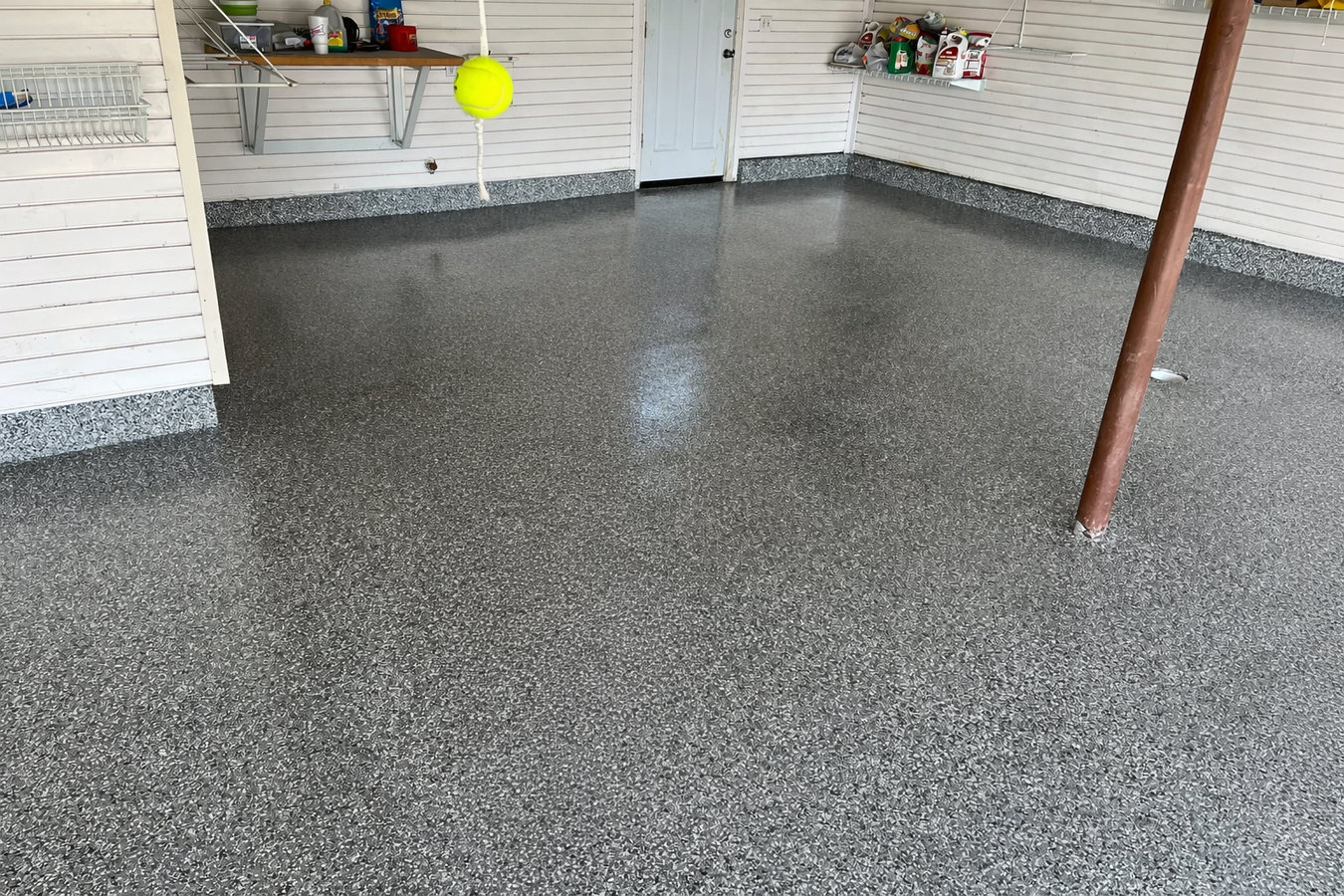
Finish options include a standard broom texture, a smooth trowel finish, or a decorative surface. We recommend sealing every new garage floor in Port Arthur given the moisture environment - we discuss timing and sealer options with every customer before the job is done. The decorative concrete service adds color, pattern, or texture if you want a finished look that goes beyond the standard grey slab.
Right for most homeowners with passenger vehicles and typical garage use.
Best for heavy vehicles, workshops, boat trailers, or any high-load use.
Suited for homeowners who want a floor that is easy to clean and protected against moisture.
Port Arthur sits at sea level along the Gulf Coast with a water table that can be just a few feet below the surface in many neighborhoods. That means moisture does not just come from rain - it pushes up through the ground year-round. Combine that with the clay soil that makes up most of Jefferson County, which swells and shrinks with every wet-dry cycle, and you have two forces that work against any concrete slab that was not specifically prepared for them. A vapor barrier under the slab and a sealed surface on top are not upgrades here - they are necessities. Hurricane Harvey in 2017 flooded much of Port Arthur, and homeowners who dealt with that flooding know firsthand that moisture management under a slab matters long after the water recedes.
We serve homeowners throughout the region. Customers in Groves and Vidor deal with the same clay soil and moisture conditions, and we prepare every base the same way regardless of which neighborhood the job is in.
We reply within 1 business day. We will ask a few quick questions about your garage, whether there is an existing slab, and what you plan to use the space for - so we can come prepared for the estimate.
We visit your property in person, measure the space, check drainage, assess the soil, and look at any existing slab. You receive a written quote covering demo, base prep, materials, labor, and sealing - no phone estimates, no hidden line items later.
Once you approve the quote we confirm your start date. Before the crew arrives, clear the garage completely - tools, shelving, and vehicles. Plan to park elsewhere for at least a week after the pour day.
The crew handles demolition, base preparation, and the pour - usually completed in a single day for a standard two-car garage. Keep vehicles off the floor for seven days minimum. Sealing is typically done a few weeks after the pour, once the concrete has fully dried.
No phone estimates. We come to your property, assess the soil and existing slab, and give you a clear written quote before any work begins.
(409) 293-3178We carry a current Texas contractor license and full liability insurance on every job. If anything goes wrong on your property, you are covered - ask to see the certificates before any contractor starts work in your garage.
We are based in Port Arthur and serve 12 cities across Jefferson, Hardin, and Orange counties. We know the clay soil, the flood zones, and the moisture conditions that affect every slab we pour in this region.
The American Concrete Institute recommends vapor barriers under slabs in high-moisture environments. In Port Arthur, that is not optional - we install them on every garage floor pour because the shallow water table here makes moisture intrusion a real and common problem.
A large portion of Port Arthur is in FEMA-designated flood zones where floor elevation requirements apply. We know which projects need city review before work begins and handle that conversation for you - no surprises after the slab is poured.
Every garage floor we pour in Port Arthur is built for what this climate actually does to concrete - not what concrete does in Houston or Dallas. The base work, the vapor barrier, and the sealer are what separate a floor that lasts 30 years from one that starts failing in five.
Transform a plain garage or patio slab into a colored, patterned surface that looks custom without the cost of tile or stone.
Learn moreNeed a concrete floor beyond the garage? We install interior and exterior slabs throughout Southeast Texas.
Learn moreConcrete poured in Port Arthur's summer heat needs extra care to cure correctly - lock in your project date now and get it done in the best conditions.