Loading...
Cracked, heaving, or draining the wrong way? We build concrete sidewalks in Port Arthur that handle clay soil, 55 inches of annual rain, and decades of daily foot traffic without the problems that plagued the old one.
Concrete sidewalk building in Port Arthur means removing the old surface, compacting and grading the soil underneath, and pouring a reinforced slab - most residential jobs take one to three days of active work. The Gulf Coast clay soil in Jefferson County swells and shrinks with every rain cycle, and that movement is the main reason sidewalks here crack and settle faster than they should. A sidewalk that was poured without proper base preparation and the right drainage slope will develop the same problems again. We address both before anything is poured. Concrete driveway building follows the same base preparation process, and many homeowners replace both at the same time to get a consistent finished result from the street to the front door.
A well-built concrete sidewalk in this area can last 30 to 50 years. The difference between one that lasts and one that does not comes down almost entirely to what happens below the surface before the pour.
If you can feel a raised edge or gap when you walk across your sidewalk, that is more than cosmetic - it is a trip hazard. Cracks wider than a quarter inch, or sections that have shifted up or down, are signs the sidewalk has moved enough that patching will not hold for long. Port Arthur clay soil causes exactly this kind of movement.
In Port Arthur, where heavy downpours come regularly, a sidewalk that holds standing water after a storm means the surface was not sloped correctly or the ground has settled unevenly. That standing water works its way into small cracks, weakens the slab from below, and speeds up deterioration.
If a section shifts slightly when you step on it or sounds hollow when you tap it, the soil underneath has washed away or settled. This is especially common in Port Arthur's clay-heavy soil, which can shrink significantly during dry spells and leave gaps beneath the slab.
Port Arthur's older neighborhoods are full of mature trees, and their roots are a common cause of sidewalk damage. If a section has been pushed up from below or a large root runs close to the surface nearby, the problem will only get worse. Replacing the section and addressing the root at the same time is the right fix.
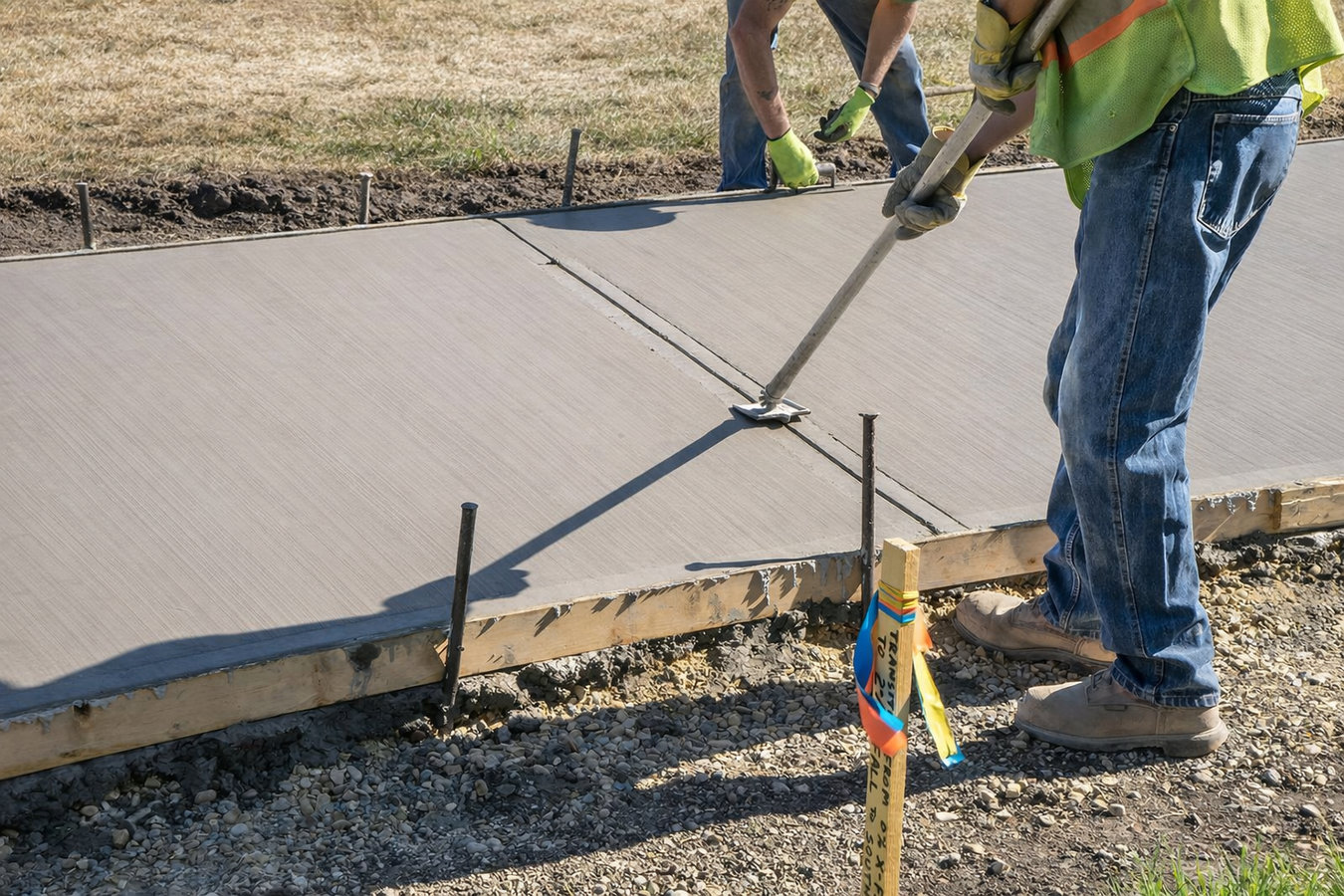
We handle the complete project: breaking out and hauling away the old concrete, grading and compacting the soil, forming the new sidewalk at the right width and thickness, pouring and finishing the slab, cutting control joints at regular intervals to guide any future cracking, and cleaning up the site when we are done. Standard residential walkways are four inches thick. Sections that cross a driveway apron or handle heavier loads are poured at six inches. The surface gets a broom finish by default - slip-resistant when wet, which matters in a city that gets as much rain as Port Arthur. We pull permits for any work connecting to a public right-of-way, and we call 811 before any digging starts to have utility lines marked.
If you are replacing a sidewalk as part of a larger project, our garage floor concrete service brings the same base preparation and drainage standards inside. We also offer optional sealing for walkways in areas with high sun or moisture exposure to extend the life of the surface and keep it looking clean longer.
Best for sidewalks with widespread cracking, significant settling, or a base that has failed - starting fresh is the most cost-effective long-term option.
Right for homeowners with isolated damage - a single section lifted by a tree root or a specific problem area - where the rest of the walk is still solid.
Suited for properties adding a front walk, connecting a driveway to an entry, or building a path through the yard for the first time.
Port Arthur receives more than 55 inches of rain per year - one of the highest totals in Texas - and sits on Gulf Coast clay soil that is constantly in motion. That combination means drainage slope is not optional on any sidewalk we build here: water that pools on the surface or runs toward your foundation after a storm will accelerate surface damage and can contribute to foundation stress over time. Many homes in Port Arthur were built between the 1940s and 1970s, and the sidewalks in these neighborhoods are often original to the house. Widespread cracking, settled sections, and crumbling edges are signs the concrete has reached the end of its life - patching extends the problem rather than solving it. Hurricane Harvey in 2017 saturated the soil across much of Jefferson County, and properties that flooded may have additional soil instability underneath existing concrete that is worth assessing before a new pour.
We work throughout the region, including Port Neches and Nederland, where the same clay soil and drainage challenges apply. Older neighborhoods across this part of Southeast Texas share the same conditions, and we build every sidewalk to handle them.
We respond within 1 business day. We will ask a few quick questions - how long is the sidewalk, is there existing concrete to remove, and are there drainage concerns or tree roots nearby. This helps us prepare for the estimate visit so we are not guessing when we get there.
We walk the area, check the slope and drainage, look for tree roots or soft spots, and assess the scope of any demo work needed. You get a written quote covering everything - demolition, base prep, materials, labor, and permit fees. No estimates over the phone, no surprise line items later.
If a permit is required - which it likely is if your sidewalk connects to the street or a public walkway - we pull it before work begins. This usually adds a few business days but protects you legally. We also call 811 to have utility lines marked before any digging starts.
Day one is demo and base prep - remove old concrete, grade and compact the soil, form the new walk. Day two is the pour and finish. Walk on it after about 24 to 48 hours; keep vehicles off for at least a week. We walk through the finished work with you before we leave.
Free written estimate, no obligation. We come to your property, assess the existing surface, and give you a clear quote before any work begins.
(409) 293-3178We compact the subgrade and address drainage before pouring anything. The clay soil under most Port Arthur homes is the reason sidewalks fail here faster than elsewhere - we treat the ground as seriously as the concrete on top of it. Skipping that step saves a day of work but costs you years of service life.
Any sidewalk connecting to a street or public right-of-way in Port Arthur needs a permit from the city before work begins. We handle the filing and pay the fee - you do not visit any offices. Permitted work is on record, which protects you from liability and makes your home easier to sell.
We serve 12 cities across Southeast Texas - Port Arthur, Beaumont, Groves, Nederland, Port Neches, and more. The same drainage standards, base preparation, and workmanship we bring to Port Arthur apply on every job we do in the region. No lower-tier crews sent to neighboring cities.
We call 811 before any digging starts on every project, as required by Texas law. Having utility lines marked prevents damage to your gas, water, and electrical lines - and it protects our crew. A contractor who skips this step is cutting corners you do not want cut.
A sidewalk that is level, properly sloped, and built on a compacted base will serve your family for 30 years or more. Every choice we make on a Port Arthur job is aimed at that outcome - not just getting through the pour day.
The American Concrete Institute sets the industry standards for concrete construction, including thickness requirements and control joint placement for residential flatwork. Contractor registration in Texas can be verified through the Texas Department of Licensing and Regulation.
Take the same quality base preparation and finishing inside - a solid garage floor that handles vehicle traffic and Gulf Coast moisture.
Learn morePair a new sidewalk with a matching driveway - both built to the same drainage and base preparation standard from curb to door.
Learn moreFall is the best season to pour in Southeast Texas - cooler temperatures make for a stronger slab. Reach out now to get on the schedule before spots fill up.