Loading...
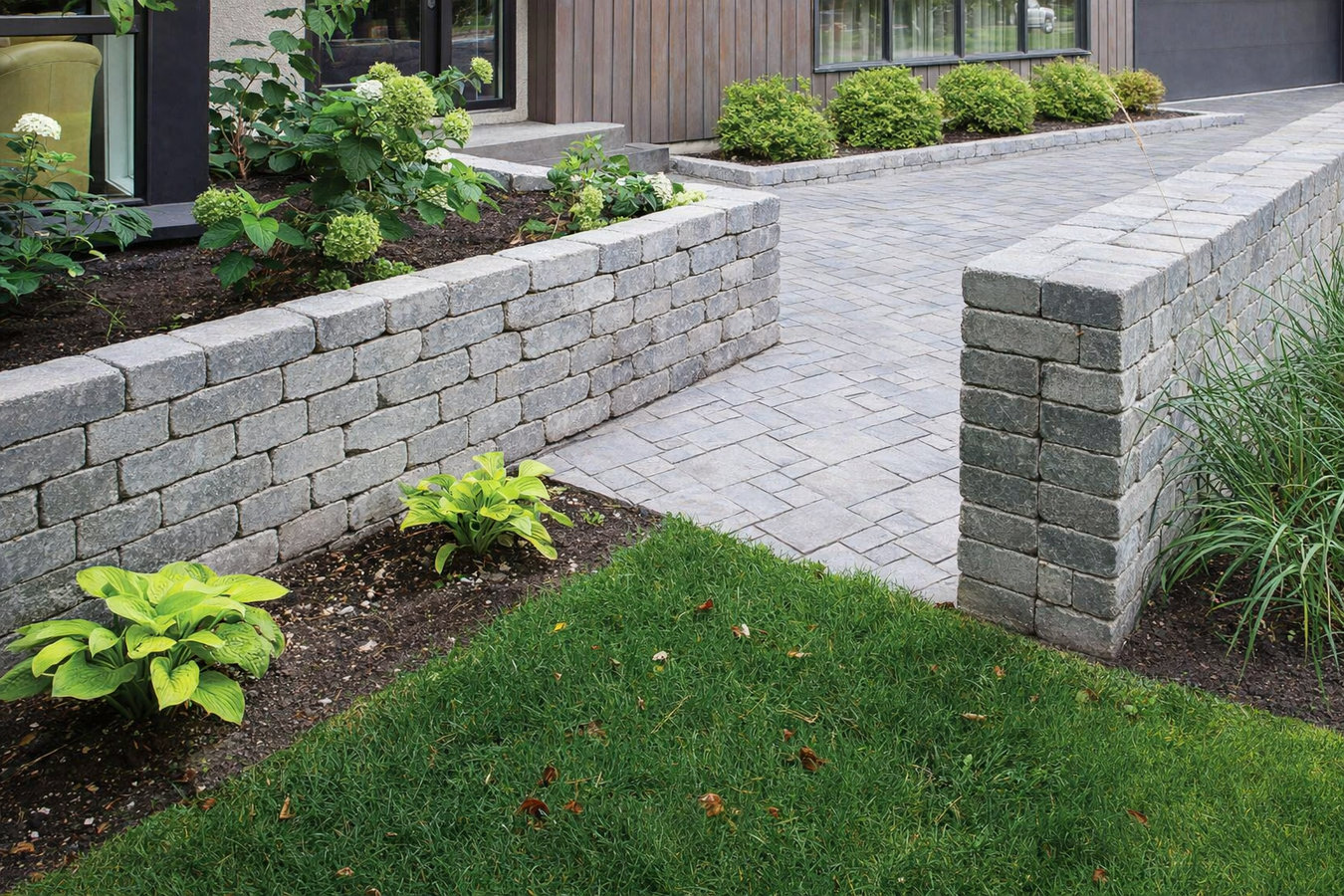
Soil sliding toward your foundation, a yard that washes out after every storm, or a failing wall that leans more each year - we build concrete retaining walls in Port Arthur that hold, drain, and last.
Concrete retaining walls in Port Arthur are built to hold back soil on sloped or unstable ground, preventing erosion and protecting your foundation - most residential jobs run 20 to 40 linear feet and take two to four days of active construction. The Gulf Coast clay soil swells and shrinks with every wet-dry cycle, which means the ground behind any wall is constantly pushing and pulling. That is why drainage is not optional here: gravel backfill and weep holes near the base are what separate a wall that lasts 50 years from one that leans within five. Concrete floor installation projects often happen alongside retaining wall work when homeowners are leveling a yard to create new usable space.
If you are dealing with soil that migrates downhill after every storm, a sloped yard that turns muddy and bare, or an existing wall that has started to lean, the problem is not going to correct itself. A concrete retaining wall is the permanent fix - and Port Arthur's rainfall makes getting the drainage right the most important part of the job.
After a heavy rain - and Port Arthur gets plenty - if you notice soil, mulch, or gravel migrating downhill toward your foundation or driveway, the ground is not being held in place. Over time, this erosion can undermine your foundation or create drainage problems that are expensive to fix. A retaining wall stops that movement before it becomes a larger problem.
If part of your yard sits higher than another part and you deal with mud, runoff channels, or bare patches after storms, the slope is shedding water faster than the soil can absorb it. In Port Arthur's flat, clay-heavy terrain, even a modest slope behaves this way during heavy rainfall. A retaining wall creates a level terrace that holds soil and water in place.
If you can see an existing wall - concrete, brick, or timber - tilting forward, developing cracks along its face, or separating from the soil at the base, it is failing. This is especially common in older Port Arthur neighborhoods where walls were built without adequate drainage and have been fighting water pressure for years. A leaning wall will not fix itself and can collapse suddenly.
Standing water collecting along the base of your house after a storm, especially on the side where the yard slopes toward the house, is working against your foundation every time it rains. A retaining wall combined with proper grading redirects that water away from your home. In a city that sees as much rain as Port Arthur, this is worth addressing before foundation repairs become necessary.
We handle the full project - site assessment, permit filing with the City of Port Arthur, excavation, footing preparation, wall construction, and drainage installation all in one. For walls that require an engineer review due to height, we coordinate that before work begins so you do not have to manage it yourself. Drainage behind the wall - gravel backfill and weep holes near the base - is included on every job, not priced as an add-on. We also handle backfill and grading once the wall has cured so water moves away from your property correctly. If you also need a level surface behind the new wall, our concrete floor installation service can pour a slab on the newly leveled area, and concrete footings can anchor any post or column structure on the leveled ground.
Whether you need a block retaining wall for a garden border or a taller structural wall to manage significant slope, we size and design the wall to the actual load and soil conditions on your property - not a one-size answer applied to every job.
Best for taller applications or where maximum strength is needed to hold back significant soil or water pressure.
Suited for shorter garden borders and yard dividers where a block aesthetic fits the property.
Right for steep slopes where a single tall wall would require engineering review - multiple shorter walls share the load.
Jefferson County averages 55 to 60 inches of rain per year, and Port Arthur regularly faces tropical storms and hurricane flooding. That volume of water puts enormous pressure on any retaining wall - especially one built without proper drainage. The Gulf Coast clay soil compounds the problem: it expands when saturated and shrinks when dry, meaning the ground behind your wall is constantly shifting. Older Port Arthur neighborhoods have plenty of walls built without weep holes or gravel drainage that are now leaning, cracked, or already failed. Building here means accounting for water from day one, not as an afterthought. The City of Port Arthur also requires permits for structural concrete work - we pull those on every job and coordinate the inspection so you do not have to.
We serve the full region, including Lumberton and Beaumont, where the same clay soil conditions and seasonal flooding affect retaining wall performance. The drainage approach we use in Port Arthur is the same approach we use across the whole Southeast Texas region because the soil and the rain do not change at the county line.
We respond within 1 business day. You can call or use the form on this page. We will ask a few quick questions - roughly how long the wall needs to be, how tall, and what problem you are trying to solve - so we can prepare for the site visit.
We walk your property, look at the slope and soil, and measure what is needed. We assess drainage requirements behind the wall and confirm whether a permit and engineer review are required. You receive a written quote covering labor, materials, drainage, and permit costs - not just one number.
We handle the permit filing with the City of Port Arthur before any work begins. Permit processing typically adds one to two weeks to the timeline - we factor that in upfront so the schedule is realistic. Once the permit is in hand, you get a firm start date.
The crew excavates the footing, constructs the wall, and installs drainage behind it in the same sequence. After the concrete sets, we backfill and grade the area. We walk the finished wall with you before we leave - drainage openings visible, surface checked, any questions answered on the spot.
We respond within 1 business day - no obligation. After you submit the form, someone from our office will call to schedule a free on-site assessment at a time that works for you. The written quote covers every line item - labor, materials, drainage, and permit - before you commit to anything.
(409) 293-3178Gravel backfill and weep holes are included in every retaining wall we build - not priced separately or skipped to cut cost. In Port Arthur's rainfall environment, a wall without drainage is a wall on a short timeline.
We work across Port Arthur and the surrounding 12 service areas in Jefferson, Hardin, and Orange counties. The Gulf Coast clay soil and seasonal flooding patterns here are conditions we build for on every job.
The American Concrete Institute sets the standards our walls are built to. We handle the City of Port Arthur permit from application to final inspection - you do not make a single call to the building department.
Every line item - excavation, wall construction, drainage installation, permit cost, backfill - is in the written quote before anyone picks up a shovel. If something unexpected comes up mid-job, we talk to you first.
Every retaining wall we build in Port Arthur is permitted, inspected, and designed for the clay soil and rainfall that define Southeast Texas. That combination is what separates a wall that holds for 50 years from one that fails in five.
Level, reinforced slabs for garages, additions, and covered outdoor areas - built with the same drainage focus as our retaining wall work.
Learn moreSolid footings transfer load safely to stable ground - the starting point for walls, columns, and structures built to last in Port Arthur clay.
Learn moreStorm season does not wait - call or submit the form and we will be in touch within 1 business day to schedule your on-site assessment.